
A Scientific Investigation into Violin and Viola Playing
By Dr Alison Loram.
This research formed the final part of an MSc in Performing Arts Medicine which I undertook between 2011 and 2013 at University College London[i]. However, it followed a gradual realisation over many years that the Alexander Technique isn’t taken seriously either in an educational or clinical setting in the way that for instance, physiotherapy or performance psychology are. This lack of recognition is sustained because the main principles of the Technique have not been demonstrated scientifically. That is not to say that the value of the Technique is totally unrecognised. Indeed, there are clinicians, teachers and students who do understand the benefits of learning the Alexander Technique and, who recommend their patients, students and/or peers to it. However, in a music or other performance department/college setting such as the ones in which I work, the Alexander Technique was, and still is, mostly seen as an “add-on”. The Technique is often offered as one of various possible performance-related disciplines, including health and well-being therapies typically with an “alternative” flavour. Rarely is the Alexander Technique seen as an essential educational method and tool that should be part of any performance student’s studies.
I wanted to put some data behind procedures that I had taken from my own Alexander Teacher training and developed over many years of teaching. Specifically, I wanted to see if it was possible to measure the differences in the way that students supported and played their instruments before, and after, they had received some intervention from me, as an Alexander teacher.
My observation over more than three decades of teaching the Alexander Technique to professional and student musicians, and helping them with their instrumental playing and singing, is that each instrument or group of instruments, is associated with a pattern of use (and misuse) common to all who play them. This pattern includes a component general to all activities, and a component specifically related to the demands of supporting and playing the instrument(s) in question. In teaching, it is possible to reduce and even eliminate the unnecessary and undesirable parts of those patterns by altering the way that the player sets themselves up to sit and/or stand, support and play their instrument. For the purpose of the study it seemed sensible to focus on one instrument group and so being a violinist, I recruited a random selection of violinists and viola players.
The first section of the thesis, Chronic profession-limiting problems in musicians, sets the scene for this experimental study by presenting a review of the literature regarding the performance-related problems of musicians, the perceived causes of those problems, and the conventional approaches to treatment and rehabilitation. My review also seeks to counter the prevailing tendency to medicalise problems and to identify many possible causes (“risk factors”). My aim was to present a more generalised and unified explanation as to why symptoms arise. The concepts and language used to explain how the Alexander Technique works, were intended to be comprehensible to anyone, regardless of their experience of the Technique. To this end, I presented a perception-selection-action feedback loop as a possible mechanism for the cause of, and solutions to, performance-related and other difficulties. This mechanism provides a way of explaining why, on account of their individual perceptions, some people develop difficulties, whilst others do not, despite the presence/absence of the same general risk factors.
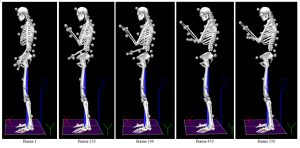
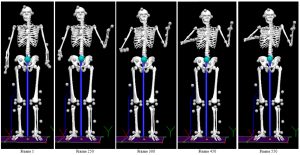
The second section, A scientific investigation into violin and viola playing, reports the experimental part of this project. The 21 participants were asked to carry out and repeat seven increasingly demanding playing tasks through six different experimental conditions. These conditions included two interventions: (a) ultrasound feedback to the muscles of the neck, in which participants were asked to minimise neck muscle activity using the image of the muscles of the neck given by an ultrasound probe, and (b) verbal feedback, in which participants were given instructions as to how to stand, pick up and hold their instruments in a different way. The results of these experiments confirmed an observable pattern of muscular activity and movement throughout the whole body that was common to all participants (see figure below). This common pattern included (i) a component of general misuse described as stiffening the muscles of the neck, pulling the head backwards and down, shortening and narrowing the back, and stiffening the knees, and (ii) a component specific to playing the violin/viola including twisting the torso anterolaterally to the right, pulling the shoulder up and/or forwards to meet the violin/shoulder rest, and pulling the head forwards and down onto the chin rest, and frequently also pulling the head down to the left side. The neck was also pulled forwards and/or to the left side, and curves in the upper and lower back increased. Both ultrasound and verbal feedback were effective in bringing about changes in the way that the participants carried out the playing tasks through a reduction in the pattern of unnecessary muscular activity and tension throughout the whole body, with verbal feedback having a greater effect. These reductions in muscle activity and unnecessary movement are revealed in the statistical discriminant function analysis of the thesis referenced below and shown visually, most clearly in slides 17-22 of the presentation also referenced below. The reduction through ultrasound and verbal feedback demonstrate that these component patterns are unnecessary for playing the violin/viola. These results were supported by the fact that all participants were still able to carry out all the playing the tasks just as well, if not better, after being given external feedback than they were before.
The transition from initial standing to sustained playing configurations
Selected frames from the mean trial for 105 trials from 21 participants in Tasks 3 to 7 in Series A, in which participants played their own instrument with no interventions. Top Row: Left lateral view: Bottom Row: Anterior view
Interpretation following the study
An insight of the Alexander Technique is that there is an observable pattern of unnecessary movement, muscle activity and tension (misuse) which is maintained as a constant, and common to all of us. This pattern involves stiffening the muscles of the neck, pulling the head backwards and down, shortening and narrowing the back, and stiffening the knees. By learning to observe and reduce this pattern of misuse in ourselves, we also reduce the harmful components of thoughts and activities which are associated with a myriad of musculoskeletal problems, and cognitive/psychological difficulties. This experimental study provided objective evidence of methods for reducing this misuse.
For more details of this study please refer to the abstracts, which can be found along with the full thesis “Chronic profession-limiting problems in musicians: Underlying mechanisms and neuroplastic routes to recovery” here and also “Explaining the Alexander Technique to clinicians and scientists: Psycho-physical re-education – an introduction to cognitive-motor system-level causes of performance-related problems”, a presentation which documents the results of the experiment.
Dr Alison Loram, Violinist and Visiting Lecturer in Alexander Technique at Royal Birmingham Conservatoire (2026).